B.Sc. (Bachelor of Science) is generally a 3–4 year undergraduate science degree, depending on the university and country. The exact major subjects vary by university. Below is a detailed overview of the major B.Sc. subjects commonly available.
1. B.Sc. Physics
What you study: Matter, energy, motion, forces, electricity, magnetism, optics, thermodynamics, quantum physics and nuclear physics.
Main areas: Mechanics, Electromagnetism, Electronics, Optics, Mathematical Physics, Quantum Mechanics.
Careers: Physicist, laboratory technician, scientific assistant, teacher, researcher, technical officer.
2. B.Sc. Chemistry
What you study: Chemical substances, their structures, properties, reactions and applications.
Main areas: Organic, Inorganic, Physical and Analytical Chemistry.
Careers: Chemist, laboratory analyst, quality-control officer, pharmaceutical professional, researcher.
3. B.Sc. Mathematics
What you study: Mathematical concepts, theories and problem-solving techniques.
Main areas: Algebra, Calculus, Geometry, Differential Equations, Number Theory, Statistics and Mathematical Analysis.
Careers: Mathematician, teacher, statistician, data analyst, banking/finance professional.
4. B.Sc. Botany
What you study: Plants and plant life.
Main areas: Plant Anatomy, Taxonomy, Genetics, Plant Physiology, Ecology, Biotechnology and Plant Pathology.
Careers: Botanist, agricultural officer, environmental professional, teacher, research assistant.
5. B.Sc. Zoology
What you study: Animals, their structure, functions, evolution and behavior.
Main areas: Animal Physiology, Anatomy, Genetics, Evolution, Ecology, Cell Biology and Wildlife Biology.
Careers: Zoologist, wildlife professional, laboratory technician, teacher, researcher.
6. B.Sc. Biology
What you study: Living organisms and biological processes.
Main areas: Cell Biology, Genetics, Microbiology, Evolution, Ecology, Physiology and Molecular Biology.
Careers: Laboratory assistant, biological researcher, teacher, environmental professional.
7. B.Sc. Microbiology
What you study: Microscopic organisms and their interactions with humans, animals, plants and the environment.
Main areas: Bacteriology, Virology, Mycology, Immunology, Microbial Genetics and Industrial Microbiology.
Careers: Microbiologist, laboratory technician, quality-control analyst, pharmaceutical/food-industry professional.
8. B.Sc. Biotechnology
What you study: Use of biological systems to develop useful products and technologies.
Main areas: Genetic Engineering, Molecular Biology, Cell Culture, Bioinformatics, Immunology and Bioprocessing.
Careers: Biotechnology technician, research assistant, laboratory professional, quality-control analyst.
9. B.Sc. Computer Science
What you study: Computers, software and computational systems.
Main areas: Programming, Data Structures, Algorithms, Databases, Operating Systems, Computer Networks, AI and Cybersecurity.
Careers: Software developer, programmer, web developer, data analyst, system administrator.
10. B.Sc. Statistics
What you study: Collection, analysis and interpretation of data.
Main areas: Probability, Statistical Methods, Regression, Sampling, Experimental Design and Data Analysis.
Careers: Statistician, data analyst, business analyst, research analyst, financial analyst.
11. B.Sc. Geography
What you study: Earth's physical environment and human activities.
Main areas: Physical Geography, Human Geography, Climatology, Geomorphology, Cartography and GIS.
Careers: GIS analyst, survey professional, cartographer, environmental professional, teacher.
12. B.Sc. Geology
What you study: Earth, rocks, minerals and geological processes.
Main areas: Mineralogy, Petrology, Geomorphology, Paleontology, Structural Geology and Economic Geology.
Careers: Geologist, mining professional, environmental consultant, groundwater specialist, geological survey professional.
13. B.Sc. Environmental Science
What you study: The environment and relationships between humans and natural ecosystems.
Main areas: Ecology, Pollution Control, Environmental Chemistry, Biodiversity, Climate Change and Environmental Management.
Careers: Environmental officer, sustainability professional, pollution-control specialist, researcher.
14. B.Sc. Biochemistry
What you study: Chemical processes within living organisms.
Main areas: Proteins, Enzymes, Carbohydrates, Lipids, Metabolism, Molecular Biology and Clinical Biochemistry.
Careers: Biochemistry laboratory professional, research assistant, clinical laboratory professional, pharmaceutical professional.
15. B.Sc. Electronics
What you study: Electronic devices, circuits and communication systems.
Main areas: Analog Electronics, Digital Electronics, Microprocessors, Instrumentation, Communication and Semiconductor Technology.
Careers: Electronics technician, instrumentation professional, technical officer, electronics engineer after appropriate further study.
16. B.Sc. Food Science / Food Technology
What you study: Food composition, processing, preservation and safety.
Main areas: Food Chemistry, Food Microbiology, Food Processing, Nutrition, Packaging and Quality Control.
Careers: Food technologist, quality-control officer, food safety professional, production supervisor.
17. B.Sc. Forensic Science
What you study: Scientific methods used to investigate crime and analyze evidence.
Main areas: Forensic Biology, Chemistry, Toxicology, DNA Analysis, Fingerprints and Crime-Scene Investigation.
Careers: Forensic laboratory professional, forensic analyst, crime-scene professional, research assistant.
18. B.Sc. Psychology
What you study: Human behavior, mental processes, emotions and cognition.
Main areas: Cognitive Psychology, Developmental Psychology, Social Psychology, Biological Psychology and Psychological Assessment.
Careers: Psychology-related assistant roles, HR, research, education and social services. Clinical practice generally requires additional qualifications and licensing.
19. B.Sc. Nursing
What you study: Healthcare, patient care, medical science and nursing practice.
Main areas: Anatomy, Physiology, Pharmacology, Medical-Surgical Nursing, Community Health and Mental Health Nursing.
Careers: Registered nurse and other healthcare roles, subject to the applicable professional registration requirements.
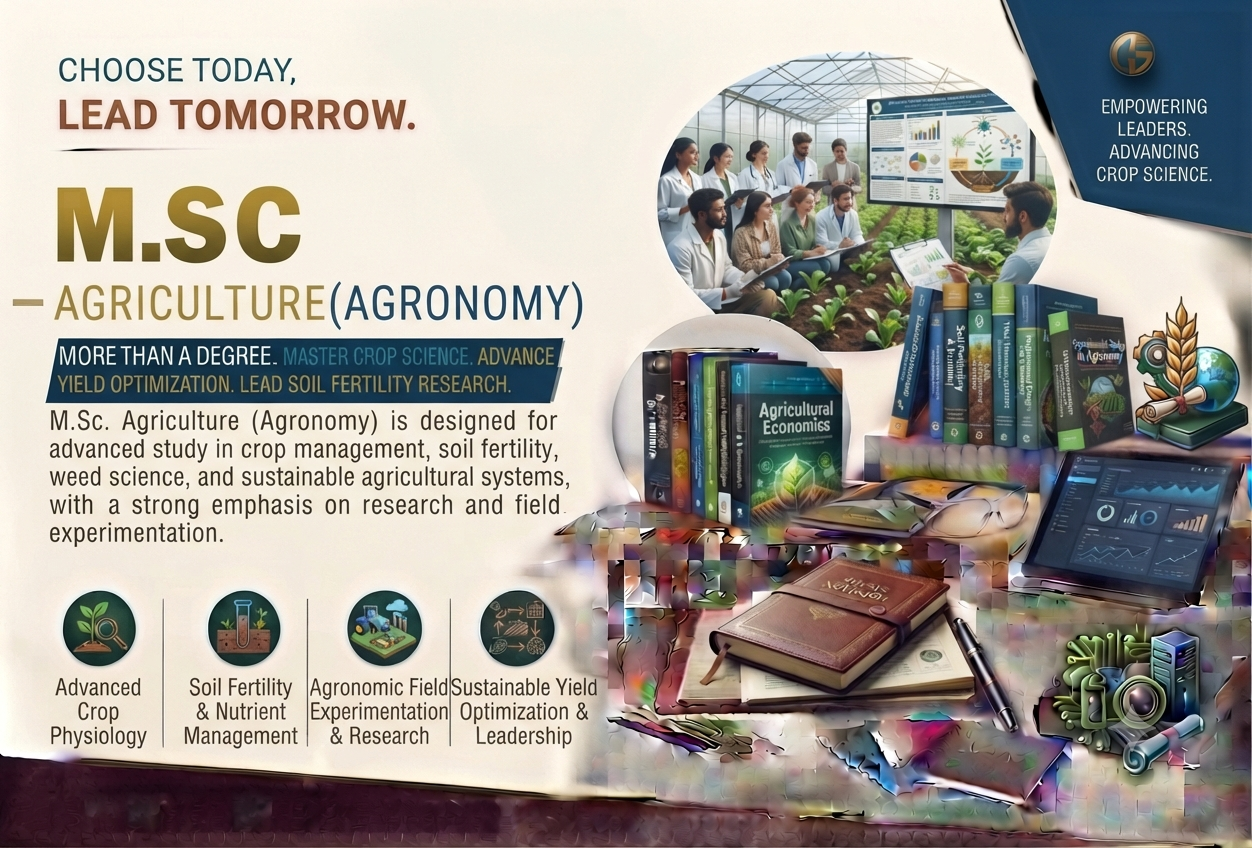
20. B.Sc. Agriculture
What you study: Crop production, soil, agricultural technology and farm management.
Main areas: Agronomy, Soil Science, Horticulture, Plant Pathology, Entomology and Agricultural Economics.
Careers: Agricultural officer, agronomist, farm manager, agricultural researcher, extension professional.
21. B.Sc. Biotechnology / Bioinformatics
What you study: Biological sciences combined with computational methods.
Main areas: Genomics, Proteomics, Computational Biology, Molecular Biology and Biological Databases.
Careers: Bioinformatics analyst, computational biology assistant, research professional, data analyst.
22. B.Sc. Nutrition / Food & Nutrition
What you study: Nutrients, diet, food and their relationship to human health.
Main areas: Human Nutrition, Biochemistry, Food Science, Community Nutrition and Diet Planning.
Careers: Nutrition professional, food-service professional, health-program worker and research assistant, depending on local qualification requirements.
Common B.Sc. combinations
Many colleges offer combination/general B.Sc. programs rather than a single major. Common combinations include:
- Physics + Chemistry + Mathematics (PCM)
- Physics + Chemistry + Biology (PCB)
- Physics + Mathematics + Computer Science
- Chemistry + Botany + Zoology
- Botany + Zoology + Chemistry
- Mathematics + Statistics + Computer Science
- Physics + Mathematics + Electronics
- Biotechnology + Chemistry + Microbiology
B.Sc. (Bachelor of Science) major subjects, here are brief descriptions of the common major subjects:
| Major Subject |
Description |
| Physics |
Study of matter, energy, motion, forces, electricity, magnetism, waves, optics, and modern physics. |
| Chemistry |
Study of substances, their properties, structures, reactions, and laboratory analysis. |
| Mathematics |
Study of algebra, calculus, geometry, statistics, differential equations, and mathematical reasoning. |
| Botany |
Study of plants, including their structure, classification, physiology, genetics, ecology, and evolution. |
| Zoology |
Study of animals, including anatomy, physiology, genetics, evolution, behavior, and ecology. |
| Biology |
Broad study of living organisms, covering cells, genetics, evolution, physiology, ecology, and biodiversity. |
| Microbiology |
Study of microorganisms such as bacteria, viruses, fungi, and protozoa and their effects on humans, animals, and the environment. |
| Biotechnology |
Application of biology and technology to develop products and processes in medicine, agriculture, industry, and environmental science. |
| Computer Science |
Study of programming, algorithms, databases, operating systems, networking, artificial intelligence, and software development. |
| Statistics |
Study of collecting, analyzing, interpreting, and presenting data using statistical methods and probability. |
| Geology |
Study of Earth’s materials, rocks, minerals, geological processes, natural resources, and Earth's history. |
| Geography |
Study of the physical and human features of Earth, including climate, landforms, population, resources, and spatial patterns. |
| Environmental Science |
Study of the environment, ecosystems, pollution, climate change, conservation, and sustainable resource management. |
| Geology/Applied Geology |
Application of geological knowledge to minerals, petroleum, groundwater, engineering, hazards, and natural-resource exploration. |
| Electronics |
Study of electronic circuits, semiconductor devices, digital systems, communication systems, and instrumentation. |
| Biochemistry |
Study of the chemical processes occurring in living organisms, including proteins, enzymes, carbohydrates, lipids, and metabolism. |
| Food Science |
Study of food composition, processing, preservation, safety, nutrition, quality control, and food technology. |
| Forensic Science |
Application of scientific methods to crime investigation, including analysis of biological, chemical, physical, and digital evidence. |